
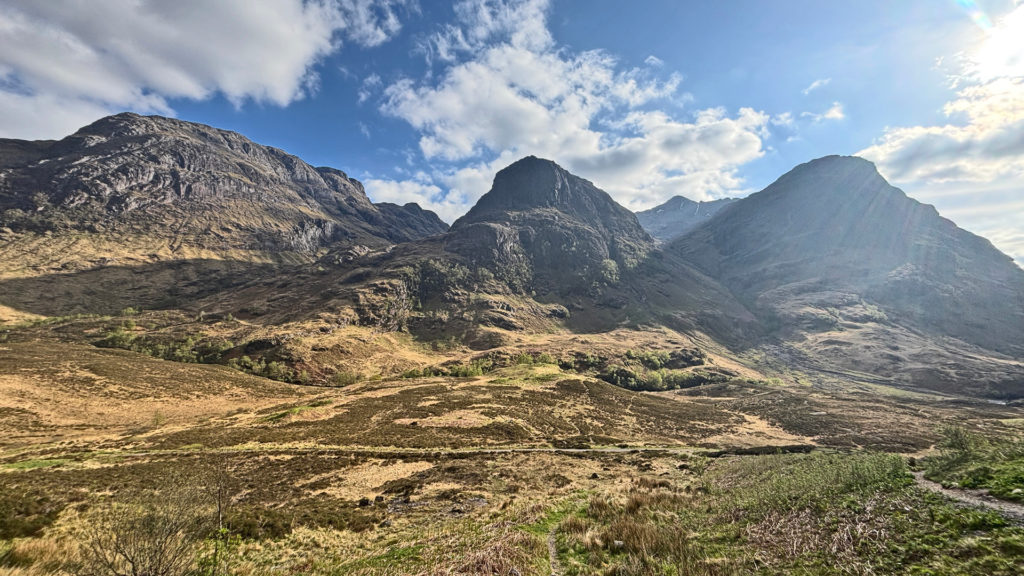
There’s something almost mythical about Glen Coe. Even before you arrive, you can feel it — the weight of its history, the sweep of its mountains, the sense that every rock and ridge holds a story. I’ve driven through the glen dozens of times, craning my neck to stare up at the Three Sisters, those great folds of stone that seem to guard the place. But this time, I wasn’t just passing through. I was heading into the Lost Valley — Coire Gabhail — a hidden bowl tucked between the peaks, once said to be where the MacDonalds of Glen Coe hid their cattle from raiders.
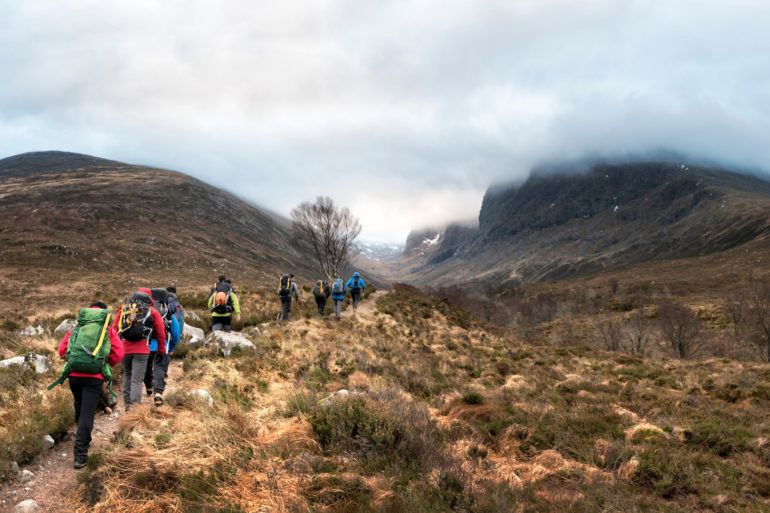
It was early when I set off, the morning light spilling through gaps in the clouds and mist drifting low across the slopes. The car park at the base of the Three Sisters was quiet — just a few other hikers adjusting packs and sipping coffee from flasks. A friendly couple from Fife gave me a nod as I laced my boots. “Watch your step on the boulders,” the man said with a grin. “They’re as slick as politics.”
The Ascent Begins
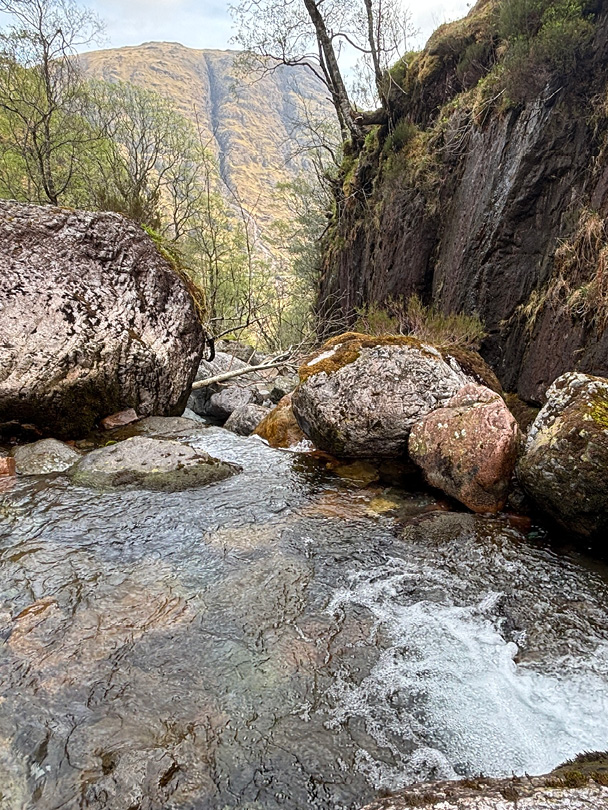
The path started steep right from the off, weaving its way up through a jumble of rocks and roots. The sound of the river, the Allt Coire Gabhail, followed me the whole way — a constant, tumbling rush that grew louder as I climbed. The air was fresh and cool, heavy with the scent of moss and wet earth.
At one point, I crossed a wooden bridge slick with drizzle, pausing to watch the white water crash below. The glen walls rose sharply on either side, closing in like stone curtains. It felt wild, ancient — a place that hadn’t changed much in centuries.
I passed a small group of hikers — students, by the look of it — crouched beside the path, studying their map and laughing as one of them admitted he’d dropped the compass “somewhere back near the waterfall.” We chatted briefly about the route, then I pressed on, finding my rhythm in the climb.
The Hidden Glen Reveals Itself
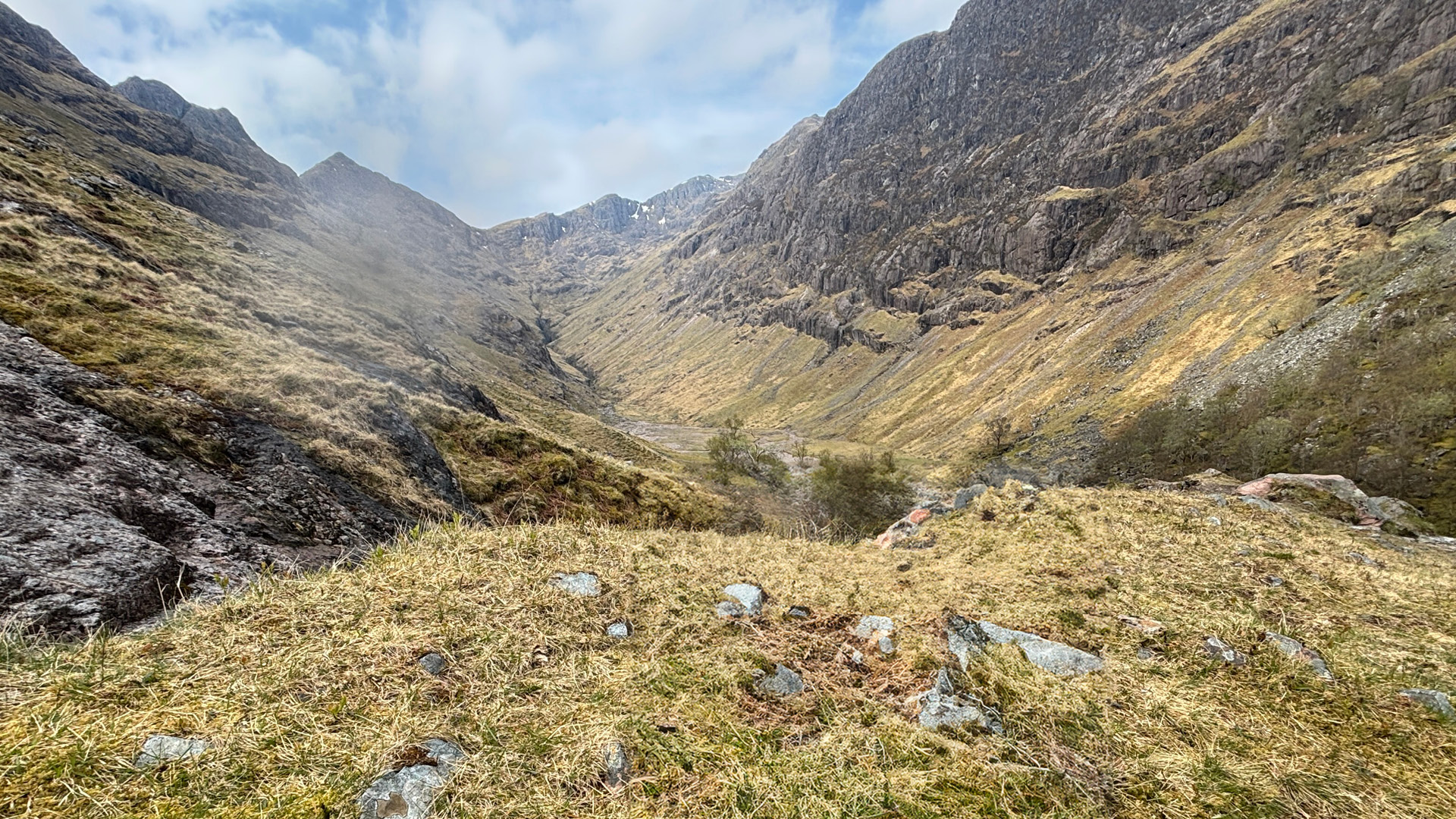
After a good hour or so, the gorge began to widen, and the climb eased off. Suddenly, the landscape opened up, and there it was — the Lost Valley.
It took my breath away.
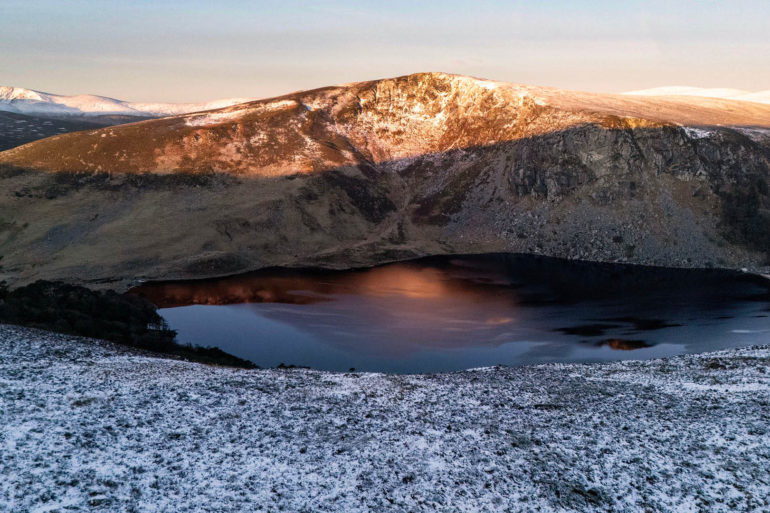
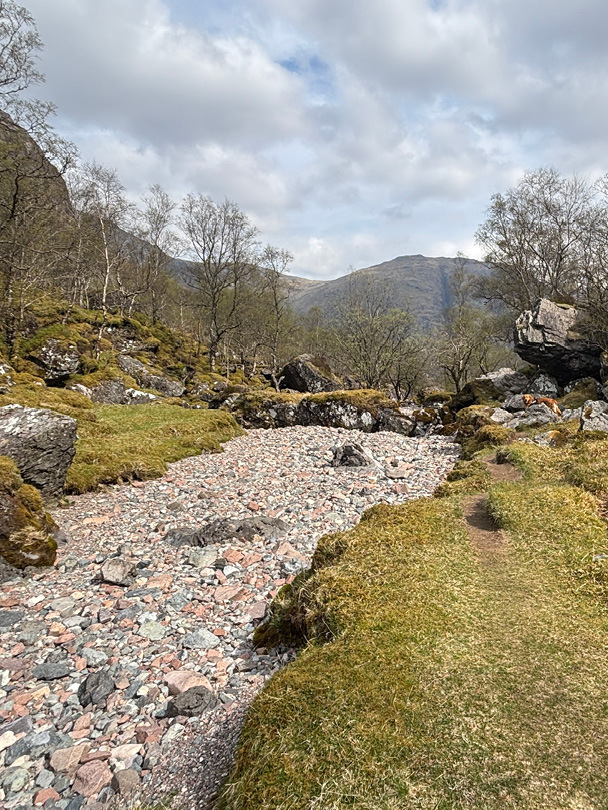
A vast, grassy basin surrounded by steep cliffs, boulders scattered like ancient ruins, and the ghostly remains of a dry riverbed winding through the middle. Wisps of cloud clung to the peaks above, curling and fading in the morning sun. The place was silent but alive — the kind of silence that hums softly in your chest.
I found a spot on a flat rock near the edge of the valley, dropped my pack, and just sat for a while. A raven croaked overhead, gliding effortlessly on the updraft. Somewhere in the distance, I heard the bleat of a goat.
There’s a strange feeling you get in places like this — a mix of awe and humility. You realise how small you are, how temporary, standing in a place that’s been here long before you and will outlast you by millennia.

Lunch in the Lost Valley
Lunch was simple: oatcakes, cheese, a chocolate bar, and a flask of tea. Somehow, food always tastes better outdoors — maybe it’s the fresh air, or maybe it’s just that you’ve earned it. As I ate, a few other hikers wandered into the valley, some heading further up toward the scree slopes beneath Bidean nam Bian, others simply sitting down in the grass, as mesmerised as I was.
One older man — wiry and weathered, with a walking stick and a thick Highland accent — stopped to chat. “You can feel the ghosts here, can’t you?” he said, glancing around. “They say the MacDonalds hid their cattle here after the massacre. Hard to imagine now, but you can almost hear them — the bells, the shouting.”
He smiled, tipped his cap, and wandered off toward the back of the valley. I finished my tea and thought about what he’d said. There’s something about Glen Coe that carries memory in the air. You don’t just see the place — you feel it.
The Way Down
By early afternoon, the clouds began to gather again, rolling in from the west. The light dimmed, and a soft drizzle started to fall. I packed up and began my descent, careful on the slick rocks. The path that had seemed straightforward on the way up suddenly felt more precarious on the way down — a mix of wet boulders, uneven steps, and narrow ledges.
Halfway down, I met the couple from Fife again. The man winked and said, “Told you about those rocks.” We laughed and exchanged a few words about the view — how it was worth every bit of effort.
The rain turned heavier near the bottom, the kind that soaks you in minutes but somehow feels part of the experience. By the time I reached the car park, my trousers were plastered to my legs, and my boots had developed their own internal ecosystem. Still, I couldn’t wipe the grin off my face.
A Pint and a Reflection
Back in Glencoe village, I stopped at the Clachaig Inn — every hiker’s haven in these parts — and ordered a pint of ale and a bowl of soup. The place was warm and full of chatter. Boots thudded on wooden floors, jackets dripped by the fire, and everyone seemed to share that same quiet satisfaction that comes after a day in the hills.
Over my pint, I scrolled through a few photos I’d taken: mist curling between peaks, the valley opening up like a secret, the quiet grandeur of it all. But the pictures didn’t quite capture it. They never do. The real magic of the Lost Valley is something you feel in your bones — the echo of history, the raw beauty of the Highlands, the stillness between footsteps.
Final Thoughts
The Lost Valley might only be a few miles’ walk, but it holds the soul of Glen Coe within it — wild, mysterious, humbling. It’s the kind of place that reminds you why we hike in the first place: to feel small, to feel alive, to connect with something far older and bigger than ourselves.
If you ever find yourself in Glen Coe, don’t just drive through. Lace up your boots, take the path beneath the Three Sisters, and go find the Lost Valley for yourself. It’s not really lost — it’s waiting.